Let the Christian rest content with his worldliness and with this renunciation of any higher standard than the world. He is living for the sake of the world rather than for the sake of grace. Let him be comforted and rest assured in his possession of this grace - for grace alone does everything. Instead of following Christ, let the Christian enjoy the consolations of his grace!
That is what we mean by cheap grace, the grace which amounts to the justification of sin without the justification of the repentant sinner who departs from sin and from whom sins departs.
Cheap grace is not the kind of forgiveness of sin which frees us from the toils of sin. Cheap grace is the grace we bestow on ourselves. Cheap grace is the preaching of forgiveness without requiring repentance, baptism without church discipline, Communion without confession, absolution without personal confession.
Cheap grace is grace without discipleship, grace without the cross, grace without Jesus Christ, living and incarnate.
Costly grace is the treasure hidden in the field; for the sake of it a man will gladly go and sell all that he has. It is the pearl of great price to buy which the merchant will sell all his goods. It is the kingly rule of Christ, for whose sake a man will pluck out the eye which causes him to stumble, it is the call of Jesus Christ at which the disciple leaves his nets and follows him.
Costly grace is the gospel which must be sought again and again, the gift which must the asked for, the door at which a man must knock.
Such grace is costly because it calls us to follow, and it is grace because it calls us to follow Jesus Christ. It is costly because it costs a man his life, and it is grace because it gives a man the only true life. It is costly because it condemns sin, and grace because it justifies the sinner. Above all, it is costly because it cost God the life of his Son: “ye were bought at a price, and what has cost God much cannot be cheap for us. Above all, it is grace because God did not reckon his Son too dear a price to pay for our life, but delivered him up for us.
Costly grace is the Incarnation of God.
---Dietrich Bonhoeffer, The Cost of Discipleship
http://www.sermonindex.net/modules/articles/index.php?view=article&aid=20735
Monday, February 8, 2010
Monday, January 18, 2010
zedekim
listen to the righteous ones! They are full of beauty, love, and joy.
These are saints who do not speak words from air, but who give words from the flesh of their hearts...for the word is made flesh and dwelt among us and has filled our hearts of joy, not of stone but of flesh...
these are all free downloads in mp3 and a few movies
also check youtube
here is Richard Wurmbrand's. He is beautiful fiery Jew...14 yrs in prison and communist torture
Richard Wurmbrand - SermonIndex.net audio sermons
and here is Corrie Ten Boom's. She is a beautiful fiery Dutch...2yrs in prison and concentration camps, saved hundreds of Jews...
Corrie Ten Boom - SermonIndex.net audio sermons
and if you want to hear what usually cheers me up on Sunday mornings
listen to this fiery Indian preacher
Ravi Zacharias International Ministries :: Let My People Think Radio Program
These are saints who do not speak words from air, but who give words from the flesh of their hearts...for the word is made flesh and dwelt among us and has filled our hearts of joy, not of stone but of flesh...
these are all free downloads in mp3 and a few movies
also check youtube
here is Richard Wurmbrand's. He is beautiful fiery Jew...14 yrs in prison and communist torture
Richard Wurmbrand - SermonIndex.net audio sermons
and here is Corrie Ten Boom's. She is a beautiful fiery Dutch...2yrs in prison and concentration camps, saved hundreds of Jews...
Corrie Ten Boom - SermonIndex.net audio sermons
and if you want to hear what usually cheers me up on Sunday mornings
listen to this fiery Indian preacher
Ravi Zacharias International Ministries :: Let My People Think Radio Program


Saturday, January 16, 2010
+

"Let nothing disturb thee; Let nothing dismay thee; All thing pass; God never changes.
Patience attains All that it strives for. He who has God finds he lacks nothing: God alone suffices."
--st. Theresa of Avila
Thursday, December 17, 2009
17 night prayer
3 You have tried my heart, you have visited me by night,
you have tested me, and you will find nothing;
I have purposed that my mouth will not transgress.
6 I call upon you, for you will answer me, O God;
incline your ear to me; hear my words.
8 Keep me as the apple of your eye;
hide me in the shadow of your wings,
9 from the wicked who do me violence,
my deadly enemies who surround me.
13 Arise, O Lord! Confront him, subdue him!
Deliver my soul from the wicked by your sword,
14 from men by your hand, O Lord,
from men of the world whose portion is in this life.
15 As for me, I shall behold your face in righteousness;
when I awake, I shall be satisfied with your likeness.
-- psalm 17
you have tested me, and you will find nothing;
I have purposed that my mouth will not transgress.
6 I call upon you, for you will answer me, O God;
incline your ear to me; hear my words.
8 Keep me as the apple of your eye;
hide me in the shadow of your wings,
9 from the wicked who do me violence,
my deadly enemies who surround me.
13 Arise, O Lord! Confront him, subdue him!
Deliver my soul from the wicked by your sword,
14 from men by your hand, O Lord,
from men of the world whose portion is in this life.
15 As for me, I shall behold your face in righteousness;
when I awake, I shall be satisfied with your likeness.
-- psalm 17
Saturday, December 12, 2009
+

O magnum mysterium,
et admirabile sacramentum,
ut animalia viderent Dominum natum,
iacentem in praesepio!
Beata Virgo, cuius viscera
meruerunt portare
Dominum Christum.
Alleluia.
O great mystery,
and wonderful sacrament,
that animals should see the new-born Lord,
lying in a manger!
Blessed is the Virgin whose womb
was worthy to bear
Christ the Lord.
Alleluia!
Tuesday, December 8, 2009
2:19
"I was kept in solitary confinement in this cell for the next two years. I had nothing to read and no writing materials; I had only my thoughts for company, and I was not a meditative man, but a soul that had rarely known quiet. I had God. But had I really lived to serve God--or was it simply my profession?
People expect pastors to be models of wisdom, purity, love, truthfulness; they cannot always be genuinely so, because they are also men: so, in smaller or greater measure, they begin to act the part. As time passes, they can hardly tell how much of their behavior is play-acting.
I remembered the deep commentary which Savonarola wrote on the fifty-first Psalm, in prison, with his bones so broken that he could sign the self-accusatory paper only with his left hand. He said there were two kinds of Christian: those who sincerely believe in God and those who, just as sincerely, believe that they believe.
You can tell them apart by their actions in decisive moments. If a man, planning to rob a rich man's home, sees a stranger who might be a police-man, he holds back. If, on second thoughts, he breaks in after all, this proves that he does not believe the man to be an agent of the law. Our beliefs are proved by what we do.
Did I believe in God? Now the test had come. I was alone. There was no salary to earn, no golden opinions to consider. God offered me only suffering--would I continue to love Him?
My mind went back to one of my favorite books, The Pateric, concerning certain fourth-century saints who formed desert monasteries when the Church was persecuted. It has 400 hundred pages, but the first time I picked it up I did not eat, drink or sleep until I had finished it. Christian books are like good wine--the older the better. It contained the following passage:
A brother asked his elder, "Father, what is silence?" The answer was, "My son, silence is to sit alone in your cell in wisdom and fear of God, shielding the heart from the burning arrows of thought. Silence like this brings to birth the good. O silence without care, ladder to heaven! O silence in which one cares only for first things, and speaks only with Jesus Christ! He who keeps silent is the one who sings, 'My heart is ready to praise Thee, O Lord!'"
I wondered how you could praise God by a life of silence. At first, I prayed greatly to be released. I asked, "You have said in scripture that it is not good that a man should be alone; why do You keep me alone?" But as the days passed into weeks my only visitor was still the guard, who brought wedges of black bread and watery soup, and never spoke a word.
His arrival reminded me daily of the saying, "The gods walk in soft shoes": in other words, the Greeks believed that we cannot be aware of the approach of a divinity. Perhaps in this silence I was coming closer to God. Perhaps, too, it would make me a better pastor; for I had noticed that the best preachers were men who possessed an inner silence, like Jesus.
When the mouth is too much open, even to speak good, the soul loses its fire just as a room loses warmth through an open door.
Slowly, I learned that on the tree of silence hangs the fruit of peace. I began to realize my real personality, and made sure that it belonged to Christ. I found that even here my thoughts and feelings turned to God and that I could pass night after night in prayer, spiritual exercise and praise. I knew now that I was not play-acting, believing that I believed.
[somewhere after 1948 arrest, published In God's Underground 1968.
--Richard Wurmbrand]
People expect pastors to be models of wisdom, purity, love, truthfulness; they cannot always be genuinely so, because they are also men: so, in smaller or greater measure, they begin to act the part. As time passes, they can hardly tell how much of their behavior is play-acting.
I remembered the deep commentary which Savonarola wrote on the fifty-first Psalm, in prison, with his bones so broken that he could sign the self-accusatory paper only with his left hand. He said there were two kinds of Christian: those who sincerely believe in God and those who, just as sincerely, believe that they believe.
You can tell them apart by their actions in decisive moments. If a man, planning to rob a rich man's home, sees a stranger who might be a police-man, he holds back. If, on second thoughts, he breaks in after all, this proves that he does not believe the man to be an agent of the law. Our beliefs are proved by what we do.
Did I believe in God? Now the test had come. I was alone. There was no salary to earn, no golden opinions to consider. God offered me only suffering--would I continue to love Him?
My mind went back to one of my favorite books, The Pateric, concerning certain fourth-century saints who formed desert monasteries when the Church was persecuted. It has 400 hundred pages, but the first time I picked it up I did not eat, drink or sleep until I had finished it. Christian books are like good wine--the older the better. It contained the following passage:
A brother asked his elder, "Father, what is silence?" The answer was, "My son, silence is to sit alone in your cell in wisdom and fear of God, shielding the heart from the burning arrows of thought. Silence like this brings to birth the good. O silence without care, ladder to heaven! O silence in which one cares only for first things, and speaks only with Jesus Christ! He who keeps silent is the one who sings, 'My heart is ready to praise Thee, O Lord!'"
I wondered how you could praise God by a life of silence. At first, I prayed greatly to be released. I asked, "You have said in scripture that it is not good that a man should be alone; why do You keep me alone?" But as the days passed into weeks my only visitor was still the guard, who brought wedges of black bread and watery soup, and never spoke a word.
His arrival reminded me daily of the saying, "The gods walk in soft shoes": in other words, the Greeks believed that we cannot be aware of the approach of a divinity. Perhaps in this silence I was coming closer to God. Perhaps, too, it would make me a better pastor; for I had noticed that the best preachers were men who possessed an inner silence, like Jesus.
When the mouth is too much open, even to speak good, the soul loses its fire just as a room loses warmth through an open door.
Slowly, I learned that on the tree of silence hangs the fruit of peace. I began to realize my real personality, and made sure that it belonged to Christ. I found that even here my thoughts and feelings turned to God and that I could pass night after night in prayer, spiritual exercise and praise. I knew now that I was not play-acting, believing that I believed.
[somewhere after 1948 arrest, published In God's Underground 1968.
--Richard Wurmbrand]
Saturday, December 5, 2009
18
16 He sent from on high, he took me;
he drew me out of many waters.
17 He rescued me from my strong enemy
and from those who hated me,
for they were too mighty for me.
18 They confronted me in the day of my calamity,
but the Lord was my support.
19 He brought me out into a broad place;
he rescued me, because he delighted in me.
he drew me out of many waters.
17 He rescued me from my strong enemy
and from those who hated me,
for they were too mighty for me.
18 They confronted me in the day of my calamity,
but the Lord was my support.
19 He brought me out into a broad place;
he rescued me, because he delighted in me.
Thursday, December 3, 2009
movie review: Zhestokiy Romans 1984
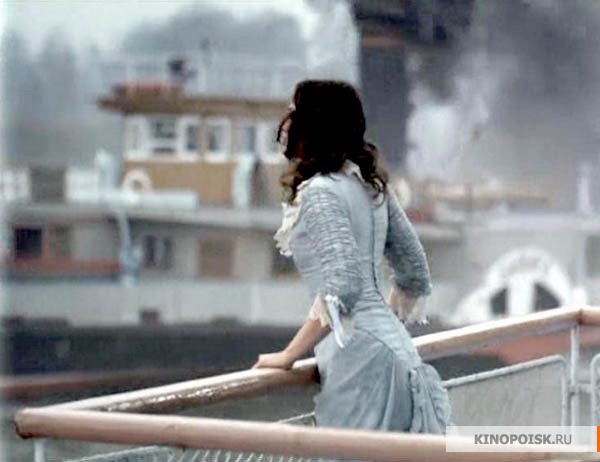
This is another Russian movie, based on a 1840's play The Dowerless Girl by Ostrovsky. I am told that this film is very close in detail to the play but completely different in spirit. I think it was a very popular film in Russia. This film is very beautiful with its stellar cast, real characters, catchy gypsy melodies, and subtle cinematography. This film is not for everyone, except perhaps if you are the type who finds depressing 19th century soap operas cathartic or just enjoy a good cry.
The story revolves around an upper-class girl with no money trying to find a suitor during a tumultuous time period seeing the end of serfdom, rising middle class, and downfall of nobility.
This story is the type of "novel without a hero" drama, with suitors who are either are suave, petty, disgusting, pitiful, or a little of each. All of the characters are human, to some degree sympathize-able, and no character is a sacrificial lamb or cardboard-cutout. Overall, the cast and screenplay are impressive, not because they convince you so well that they are from a different time, but because they convince you that there is no such thing--that it is your own.
What amazed me most was how the film transformed a sorrowful tale of political and social upheaval into a universal tale about people's inability in search for eternal, unconditional human love---particularly about woman's innate and irrational desire for eternal, unconditional, and fulfilling love, often thought to be found in men or marriage.
It is odd how so many girls think that they can prove their mothers wrong, or are even encouraged by their mothers to think that their mothers' situation is exceptional or amendable.
Their mothers' situations are not exceptional, nor amendable, because their problem is not from situation--it is from within. We are our mothers. We are Eve. And our desire shall be for our husband, and he shall rule over us.
No, fulfillment cannot come from humanity, from human love, from humanistic ideals or idealistic humanism.
Idealistic humanism is ultimately idolatrous, because it is searching for fulfillment within. I think it is sad that what Hollywood pretends and promotes is also what many Christians in America seem to buy, sell, and worship. But what you make or buy cannot eternally satisfy, for they are only dead images carved by men; they have ears but cannot hear, mouths, but cannot speak.
For some reason it seems that true idealism, or belief in the beautiful unseen, only works when there is faith in the beautiful, everlasting, all-powerful, just, self-sustaining, and unseen purpose. Somehow, finding purpose in present life or mankind is futile, yet so many have succeeded only when they did not believe and rely on the present, but on the eternal.
When man searches within, he is empty. When man searches without, he is full.
"Let nothing disturb thee; Let nothing dismay thee; All thing pass; G-d never changes.
Patience attains All that it strives for. He who has G-d finds he lacks nothing: G-d alone suffices." --st. Theresa of Avila
Wednesday, October 21, 2009
1762
O Thou who camest from above,
the pure celestial fire to impart
kindle a flame of sacred love
upon the mean altar of my heart.
There let it for thy glory burn
with inextinguishable blaze,
and trembling to its source return,
in humble prayer and fervent praise.
Jesus, confirm my heart's desire
to work and speak and think for thee;
still let me guard the holy fire,
and still stir up thy gift in me.
Ready for all thy perfect will,
my acts of faith and love repeat,
till death thy endless mercies seal,
and make my sacrifice complete.
--charles wesley Lev.6:13
the pure celestial fire to impart
kindle a flame of sacred love
upon the mean altar of my heart.
There let it for thy glory burn
with inextinguishable blaze,
and trembling to its source return,
in humble prayer and fervent praise.
Jesus, confirm my heart's desire
to work and speak and think for thee;
still let me guard the holy fire,
and still stir up thy gift in me.
Ready for all thy perfect will,
my acts of faith and love repeat,
till death thy endless mercies seal,
and make my sacrifice complete.
--charles wesley Lev.6:13
Tuesday, September 8, 2009
Music Lit, and interpretations on vegetation continued
It seems crazy that we musicians are always trying to preserve "the culture" and love all music--from every culture--yet get so bogged down realizing how ignorant our fellow Americans (or international students for that matter) are. It occurred to me that it is as if we musicians are always pruning a rose bush that is in danger of going extinct, yet we ourselves don't know how it got there, or how to plant it ourselves. But if we don't even acknowledge the ground--and claim all cultures were equally progressive--then we really can't help our little rose bush. Another analogy is refrigerating a ripened fruit from going bad--and yet we don't even know how it got there. So we practice several hours a day to continue the life of the plant, we teach our courses on how to appreciate music to ignorant college kids who never heard Gregorian chant save in multi-shooter video games...and we are not allowed to discover the source, because that would encourage chauvinism, and we are a diverse nation.
Of course it cheered me up a great deal that there was a source, a seed that could be sown.
If it is something we believe, then it cannot be just faith in anything, but a certain kind of faith...one being able to discover, to affect, to be affected, in time, and outside of it, eternally...
Of course it cheered me up a great deal that there was a source, a seed that could be sown.
If it is something we believe, then it cannot be just faith in anything, but a certain kind of faith...one being able to discover, to affect, to be affected, in time, and outside of it, eternally...
Friday, September 4, 2009
Music lit, Catholicism, and interpretations on vegetation
This conversation occurred with my professor after Music Lit class after he spent 30+ minutes exhausting to us that though Western music evolved from gregorian chant, the nature of the Catholic church prevented and stunted musical growth, while any music that came out of the church was obviously breaking these restrictions and rebelling against church orthodoxy. (and the glorious progress in music during the Renaissance was a result from church collapse and loss of faith from the bubonic plague.)
"Isn't it interesting that music is not diverse? That most of the music we have today is a result from Western Civilization? And we are not allowed to speak of it? Yet when we have vegetation from ground, we may speak of it as weeds or flowers, and argue that the vegetation came in spite of the ground, and that it is horrible and rocky, and argue that the vegetation "rebelled" in spite of the ground, yet we all must acknowledge that the ground was suitable for such vegetation.
Here and there we speak in different terms of the vegetation, whether it be flower or weed, or fruit--but we do not deny the ground. We may speak of the Protestant reformation as being a rebellion--or fruit of--Catholicism. But we do not deny the ground was suitable for it to sprout."
"Isn't it interesting that music is not diverse? That most of the music we have today is a result from Western Civilization? And we are not allowed to speak of it? Yet when we have vegetation from ground, we may speak of it as weeds or flowers, and argue that the vegetation came in spite of the ground, and that it is horrible and rocky, and argue that the vegetation "rebelled" in spite of the ground, yet we all must acknowledge that the ground was suitable for such vegetation.
Here and there we speak in different terms of the vegetation, whether it be flower or weed, or fruit--but we do not deny the ground. We may speak of the Protestant reformation as being a rebellion--or fruit of--Catholicism. But we do not deny the ground was suitable for it to sprout."
Thursday, September 3, 2009
11
In the Lord I take refuge;
how can you say to my soul,
“Flee like a bird to your mountain,
2 for behold, the wicked bend the bow;
they have fitted their arrow to the string
to shoot in the dark at the upright in heart;
3 if the foundations are destroyed,
what can the righteous do?”
4 The Lord is in his holy temple;
the Lord's throne is in heaven;
his eyes see, his eyelids test the children of man.
5 The Lord tests the righteous,
but his soul hates the wicked and the one who loves violence.
6 Let him rain coals on the wicked;
fire and sulfur and a scorching wind shall be the portion of their cup.
7 For the Lord is righteous;
he loves righteous deeds;
the upright shall behold his face.
how can you say to my soul,
“Flee like a bird to your mountain,
2 for behold, the wicked bend the bow;
they have fitted their arrow to the string
to shoot in the dark at the upright in heart;
3 if the foundations are destroyed,
what can the righteous do?”
4 The Lord is in his holy temple;
the Lord's throne is in heaven;
his eyes see, his eyelids test the children of man.
5 The Lord tests the righteous,
but his soul hates the wicked and the one who loves violence.
6 Let him rain coals on the wicked;
fire and sulfur and a scorching wind shall be the portion of their cup.
7 For the Lord is righteous;
he loves righteous deeds;
the upright shall behold his face.
Subscribe to:
Posts (Atom)


